Human identity
Who are we beneath the social labels and divisions through which people define one another?
Lalon Shah is remembered as a major figure in Bengal’s Baul tradition — a composer and spiritual thinker whose songs engage with humanity, identity, devotion and the rejection of caste and sectarian division.
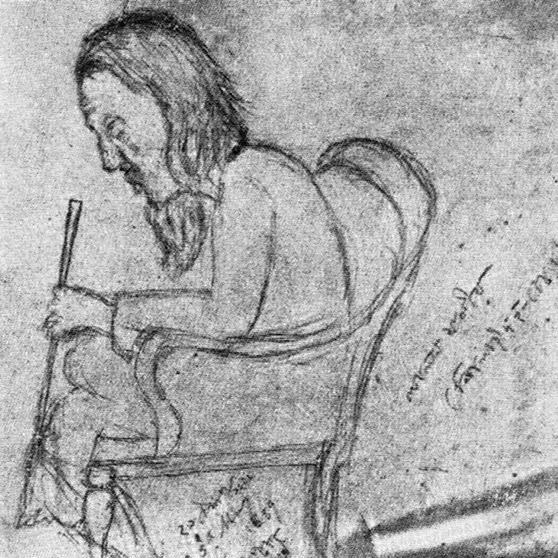
Lalon’s songs repeatedly return to the human being — questioning the boundaries people create around caste, religion and identity.
Banglapedia describes Lalon’s songs as expressing humanism and a non-sectarian outlook, and notes his rejection of caste distinction. His work draws on multiple currents of religious and philosophical thought while developing a distinctive language of its own.
Rather than reducing that legacy to a single label, this Foundation presents it as an invitation to encounter the questions carried through his songs.
Who are we beneath the social labels and divisions through which people define one another?
The human body, inner experience, devotion and the search for truth recur throughout Baul thought.
Lalon’s songs challenge caste and sectarian boundaries and imagine human relationships beyond them.
UNESCO describes Bauls as mystic minstrels of rural Bangladesh and West Bengal whose music, poetry and way of life have deeply influenced Bengali culture. Their songs are transmitted orally and are commonly performed with instruments including the ektara, dotara and dubki.
Baul songs were inscribed in 2008 on UNESCO’s Representative List of the Intangible Cultural Heritage of Humanity, after originally being proclaimed in 2005.
Baul songs have traditionally passed between teachers, disciples and performers rather than relying only on written texts.
UNESCO’s safeguarding work has highlighted the Kushtia Baul community and Lalon Shah’s role in intergenerational transmission.
The tradition continues through performance, teaching, documentation and cultural gatherings.
The Foundation’s role is not to turn living heritage into decoration. It is to create thoughtful ways for people to encounter the music, ideas, stories and communities connected with Lalon and Baul culture.
The cultural landscape associated with Lalon remains an important visual thread in the Foundation’s exploration of heritage, music and human connection.